
Call Us Now!
Serving Cooper City, FL
Fast, Clean, and Professional Stump Removal.
Stump Grinding Tips & Tree Care Insights
Contact Us
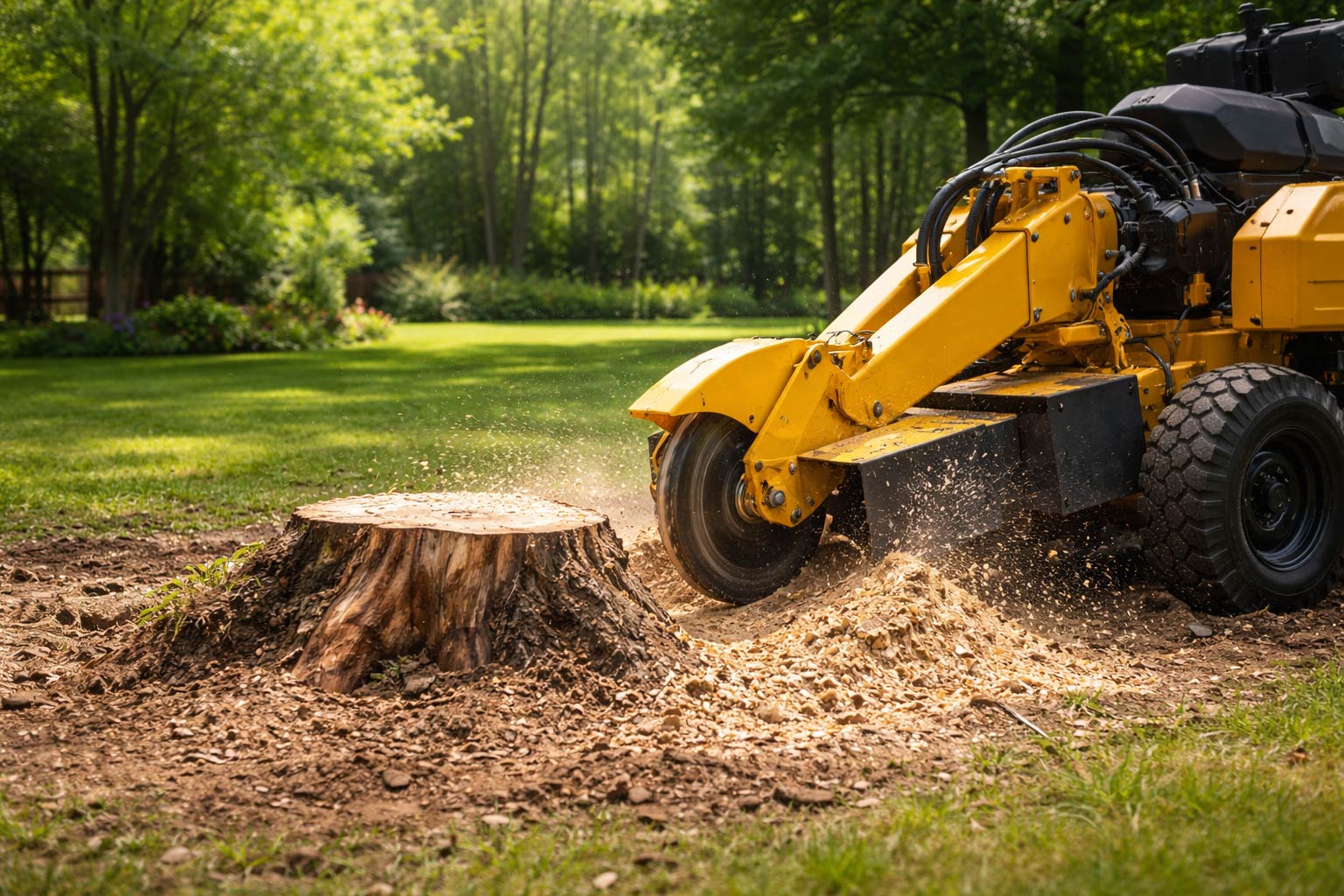
Does Stump Diameter Affect Stump Grinding Price?
Introduction
If you have started comparing stump grinding quotes, you have probably noticed that not every stump is priced the same way. Two stumps on the same property can end up with different estimates, even when both look manageable at first glance.
One of the biggest reasons is diameter. In stump grinding, diameter is one of the main ways companies estimate how much machine time, labor, and debris a job will involve. Industry pricing guides commonly note that stump grinding is often priced by diameter inch, usually alongside other factors like access, number of stumps, and cleanup.
Why Diameter Matters So Much
Diameter affects price because it changes the actual scope of the job. A wider stump usually takes longer to grind, produces more mulch and wood chips, and may require the grinder to cover a broader area than a smaller stump.
That matters even more when the base of the stump flares out near the ground. A stump might not look huge from above, but if it has a broad root flare, the work can still take longer than expected. Current cost guides consistently list stump diameter as one of the main factors behind higher pricing.
How Diameter Usually Shows Up in Pricing
Many stump grinding companies use diameter as a starting point when building a quote. Current cost references commonly place stump grinding around $2 to $5 per diameter inch, while also noting that many companies have a minimum charge of about $100 to $150 for a job.
That does not mean diameter is the only thing that matters. It means diameter often sets the baseline, then other job conditions move the final quote up or down.
Small-Diameter Stumps
Smaller stumps are often quicker to handle, but that does not always mean the total price will be extremely low. Many companies still apply a minimum service charge, so a very small stump may not cost much less than another small job nearby. Current pricing guides specifically note this minimum-charge pattern.
Medium-Diameter Stumps
This is where diameter-based pricing tends to be easiest to understand. As the stump gets wider, the quote usually increases because the machine has to cover more wood and the job produces more debris.
Large-Diameter Stumps
Large stumps often push pricing higher for several reasons at once. They take longer to grind, may involve heavier root flare, and can leave behind much more mulch. Angi notes that large-diameter stumps can push a project total much higher than a standard job.
Why Diameter Is Not the Only Pricing Factor
Diameter matters, but it is not the whole story. A larger stump in an open yard may still be simpler than a smaller stump in a hard-to-reach backyard.
When a company gives a quote, diameter is usually being considered alongside other site conditions. Some of the most common ones include:
Access to the stump
Narrow gates, fenced backyards, slopes, or tight spaces can make setup and grinding more time-consuming.Number of stumps
Multiple stumps may increase the total, but the per-stump cost can sometimes become more efficient when everything is done in one visit.Cleanup and haul away
Removing chips and mulch from the property usually adds to the final price.Depth of grinding
Standard grinding is one thing. A deeper grind for replanting or hardscaping can add more machine time.Surface roots or root flare
A stump with wide exposed roots may require more work than the diameter alone suggests.
These same factors show up repeatedly in current stump grinding pricing guides.
Why a Wider Stump Often Costs More Than You Expect
Homeowners sometimes assume stump price increases in a simple, tidy way. In reality, diameter can affect more than just the visible width of the cut surface.
A wider stump often means:
More passes with the grinder
The machine has to travel across a larger area of wood.More time at the stump
Greater diameter usually means more material to break down.More debris to manage
Larger stumps create more chips and mulch, which matters if cleanup is part of the job.More chance of added root flare
The visible diameter may not fully show how broad the base is near grade.
This is why stump diameter affects stump grinding price in such a direct way. It is not just a number on paper. It changes the real work involved.
What This Means for Homeowners Comparing Quotes
If you are getting estimates, diameter should be one of the first things you expect a company to ask about. In many cases, that question helps them quickly place the job into a workable price range before they factor in access, cleanup, and other conditions.
That also means two important things for homeowners:
A very small stump may still have a minimum price
Even if the stump is small, there is still travel time, equipment setup, and labor involved. That is why industry sources often mention minimum charges for stump grinding jobs.
A quote based only on diameter may not tell the full story
If one estimate seems much lower than another, it is worth checking whether both quotes include the same scope. One may include standard grinding only, while another may include more cleanup, deeper grinding, or a more realistic allowance for access conditions.
When Diameter Matters Less Than Site Conditions
There are some cases where stump diameter is not the biggest issue. This usually happens when access or site complexity creates more of the challenge than the stump itself.
Examples include:
A medium stump behind a narrow gate
A smaller stump near a fence, patio, or utility-sensitive area
Several smaller stumps spread across a large property
A stump on a slope or awkward section of the yard
In those cases, diameter still matters, but the property layout may have just as much influence on the quote.
A Better Way to Think About Stump Grinding Price
Instead of asking only, “How wide is the stump?” it helps to think in terms of total job scope. Diameter is one of the strongest pricing signals, but it works together with everything else happening at the property.
A realistic stump grinding quote usually reflects:
The stump’s diameter
The difficulty of access
The amount of debris created
Whether there are multiple stumps
Whether cleanup and haul away are included
Whether standard or deeper grinding is needed
That is why stump diameter affects stump grinding price so consistently, but it is also why diameter alone never tells the entire story.
Frequently Asked Questions
Does stump diameter affect stump grinding price?
Yes. Diameter is one of the main factors used to estimate stump grinding cost because wider stumps usually take more time, create more debris, and require more grinding work. Current industry pricing guides consistently describe diameter as a major cost driver.
How do companies usually price stump grinding by diameter?
Many cost guides say stump grinding is often priced at around $2 to $5 per diameter inch, although companies may also apply a minimum job charge and adjust the price for access, cleanup, and other conditions.
Why can a small stump still seem expensive?
A small stump may still be subject to a minimum service fee. Even if the grinding itself is quick, the company still has to account for travel, setup, and equipment use.
Do larger stumps always cost more?
Usually, yes. Larger-diameter stumps generally require more machine time and generate more debris, which pushes the quote higher.
Is diameter the only thing that affects the quote?
No. Access, number of stumps, cleanup, root flare, and grinding depth can all change the final price. Diameter is important, but it is one part of the total scope.
Get a Quote Based on the Actual Stump, Not Just the Measurement
If you are trying to figure out whether stump diameter affects stump grinding price, the answer is yes, but it should never be looked at in isolation. Diameter is one of the main pricing factors, but the final quote also depends on access, cleanup, and how much work the site actually requires.
Foundation Stump Grinding provides stump grinding services in Cooper City, FL for homeowners and property managers who want clear, practical pricing based on real site conditions. If you want an estimate that reflects your stump size, access, and cleanup needs, reach out to Foundation Stump Grinding for a quote.

© 2026 All Rights Reserved | Foundation Stump Grinding
Website Done By: LocalEyes