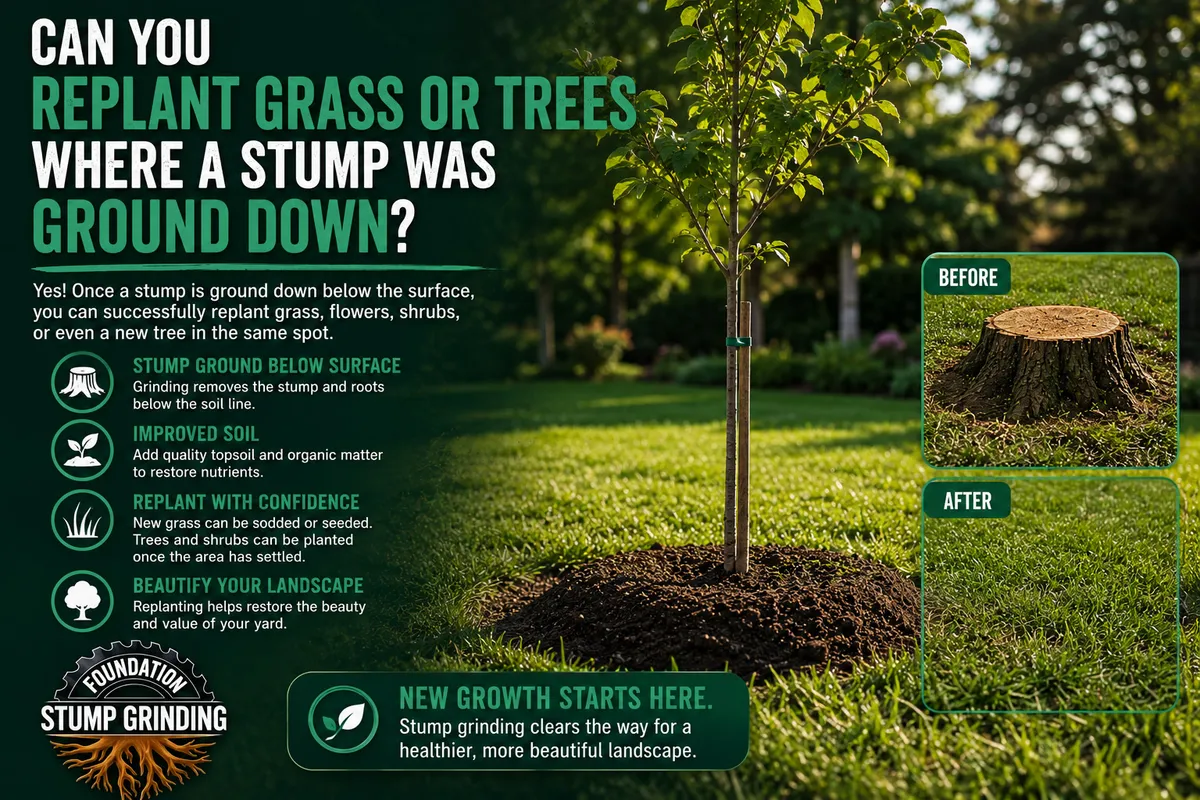
Can You Replant Grass or Trees Where a Stump Was Ground Down?
One of the most common questions property owners ask after stump grinding is what they can actually do with the area once the stump is gone. You have cleared an obstruction from your yard, and now you have a patch of disturbed ground filled with wood chip mulch. Can grass grow back there? Can you plant a new tree in the same spot? The answer to both questions is yes, but there are specific steps and timing considerations that will determine whether your replanting effort succeeds or fails. This guide walks through everything you need to know before putting anything new in the ground after grinding in Cooper City, FL.
What Is Left in the Ground After Grinding?
Standard residential stump grinding removes the stump to a depth of eight to twelve inches below the surface. What remains underground is the original root system, which is left to decay naturally over several years. The area directly above where the stump was is filled with a mixture of ground wood chips and soil.
This mix is important to understand because it affects what you can plant and how soon. Fresh wood chips actively decompose, and as they do, they temporarily draw nitrogen from the surrounding soil. This nitrogen depletion can inhibit grass growth and stress newly planted vegetation if the area is not properly prepared before replanting.
Replanting Grass in the Ground Area
Grass can absolutely be established over a ground stump area, but the process requires a few preparation steps to give it the best chance. Homeowners in Cooper City, FL who skip these steps often find their seed or sod does not take as expected. The following steps give you the best results.
Remove or till in the bulk of the surface wood chips, replacing them with quality topsoil to create a stable seed bed
Add a nitrogen-rich fertilizer to compensate for the temporary nitrogen depletion caused by decomposing wood below
Mix topsoil to a depth of at least four to six inches to give roots room to establish before they encounter decomposing wood material
Seed with a grass variety appropriate for Broward County's climate, such as St. Augustine or Bahia
Water consistently for the first two to four weeks to support germination and early root development
With proper preparation, grass will establish in the area within one growing season. The decomposing wood below will actually improve soil quality over time as it breaks down into organic matter.
Can You Plant a New Tree in the Same Spot?
Planting a new tree directly in the same spot as a recently ground stump is generally not recommended without additional preparation. The reasons relate to what is left underground and how it affects a new tree's establishment.
The remaining root system from the old tree occupies the soil space that a new tree's roots need to colonize. As those old roots decay, they create irregular soil composition and can cause uneven settling around the new planting. Additionally, if the old tree suffered from any root disease, planting the same or a related species in the same location can expose the new tree to the same pathogens.
For homeowners in Broward County who want a new tree in the same general area, planting a few feet away from the original stump location is usually the better approach. If the exact location is required, requesting a deep grind of twelve to eighteen inches and then amending the soil thoroughly before planting gives the new tree the best start.
Timing: How Long Should You Wait Before Replanting?
The waiting period before replanting depends on what you plan to put in the ground and what depth of grinding was performed. The following general guidance applies to most Broward County properties.
Grass seed or sod: Replanting can begin as soon as soil preparation is complete, typically one to two weeks after grinding once the area is properly amended
Small shrubs or groundcovers: A wait of four to eight weeks allows initial decomposition activity to stabilize the soil composition
New trees: A minimum of three to six months is recommended for a standard grind, or immediately after a deep grind with full soil amendment
Garden beds: Can be established relatively quickly with proper topsoil addition and organic amendment
Cooper City, FL homeowners benefit from the region's growing season, which extends much of the year and allows for faster establishment of new plantings than in cooler climates.
Frequently Asked Questions
Can I use the wood chip mulch produced by grinding in my garden beds?
Yes, but with a caveat. Fresh wood chips from grinding are excellent as surface mulch around established plants, but they should not be mixed directly into planting soil because of the nitrogen draw-down effect during decomposition.
Will the remaining roots interfere with irrigation lines?
Existing roots that were already in place before grinding generally will not spread further after the tree is removed. However, decaying roots can create voids in soil near irrigation lines over time. Inspect the area after a season or two and address any settling.
Does the type of tree that was removed affect how long I should wait to replant?
Yes. Trees that are allelopathic, meaning they produce chemicals that inhibit nearby plant growth, can affect the soil for one to two years after removal. Black walnut is the most common example, though it is not typical in Broward County. For most local species, standard waiting periods apply.
Can I plant vegetables or edible plants in a formerly ground stump area?
Edible plants can be grown there, but it is wise to replace the wood chip and soil mix with fresh topsoil and compost first to ensure consistent nutrient levels and avoid any residual concerns from chemical treatments the original tree may have received.
What is the best grass type to plant in Cooper City, FL after stump grinding?
St. Augustine grass is the most widely used lawn grass in South Florida and performs well in the amended soil conditions following stump grinding. Bahiagrass is a lower-maintenance alternative that also establishes reliably in Broward County's climate.
Turning a Problem Spot Into a Productive Part of Your Yard
The area where a stump once sat does not need to remain a bare patch. With the right preparation, it becomes some of the most workable ground on your property, rich in decomposing organic material and fully usable for whatever your landscaping plans call for. Foundation Stump Grinding serves Cooper City, FL and surrounding Broward County communities and can discuss grinding depth options based on your specific replanting plans. Call 754-296-6966 to get started.
