Is Stump Removal Ever Necessary Instead of Grinding?
Introduction
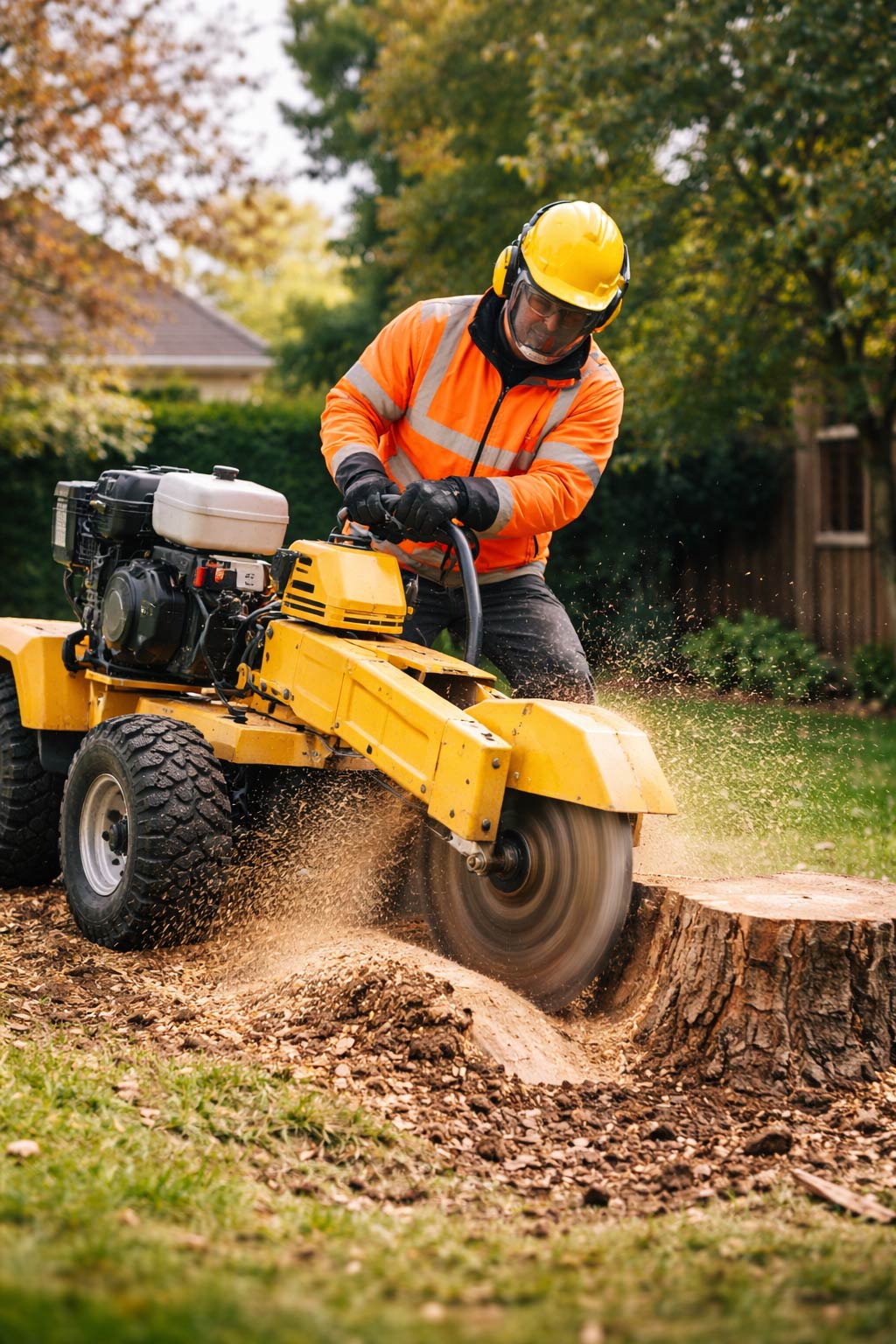
For most properties, stump grinding is the more practical solution after a tree is cut down. It removes the visible stump, improves the look of the yard, and restores usable space without the disruption that comes with digging everything out. That is why so many homeowners start there when deciding what to do next.
Still, there are situations where stump removal is necessary instead of grinding. The answer usually depends on what needs to happen after the stump is gone. If the area is tied to excavation, construction, or a very specific use of the soil, grinding may not provide enough clearance. This guide explains when stump removal is actually needed, when grinding is usually enough, and how to think about the difference before choosing the service.
Why Stump Grinding Is Usually Enough
In many residential situations, the goal is to get rid of the visible stump and make the area usable again. Stump grinding is designed for exactly that.
The stump is ground below the surface so the area can be leveled and restored without tearing up the full root system. That usually means less mess, less damage to the surrounding yard, and a more efficient process overall. For homeowners who want to improve safety, clear space for lawn use, or move forward with simple landscaping, grinding often solves the real problem without turning it into a larger project.
That is why stump removal is not automatically necessary just because a stump is still in the ground. In many cases, the remaining roots can stay where they are and break down naturally over time.
When Stump Removal May Actually Be Necessary
Stump removal is usually necessary only when the area needs more than surface-level clearance. In those cases, the project is no longer just about appearance or basic usability. It becomes a question of what the space must support afterward.
Here are the situations where full removal may make more sense than grinding.
Construction in the Exact Same Area
If the site is being prepared for a foundation, footing, utility line, retaining structure, or another project that requires full excavation, stump removal may be necessary. Grinding clears the stump below grade, but it does not remove the full root mass.
When a construction project needs completely open soil in that exact location, leaving the roots in place may not be enough.
Major Regrading or Excavation Work
Some properties are already being reshaped for drainage, grading, or larger yard changes. If the ground is being heavily disturbed anyway, removing the stump and root system may fit better into that broader scope of work.
In that situation, stump removal is often less about the stump itself and more about the overall site plan.
Replanting Directly in the Same Spot
If the plan is to plant another tree in nearly the same location, full removal may sometimes be considered. Grinding is often enough when the replacement planting can be shifted slightly, but it may not be ideal if the new planting needs the exact same space underground.
This depends on the size of the original stump, the type of replacement planting, and how much below-ground clearance is needed.
Specific Site Requirements
Some projects have requirements that go beyond what standard grinding is meant to accomplish. That could include planned structural work, specialty landscaping, or another use where the full stump and root ball cannot remain in place.
In those cases, stump removal may be necessary because the future use of the area demands more complete clearance.
Situations Where Grinding Is Still the Better Choice
Even when homeowners wonder if stump removal is necessary, the answer is often no. A lot of stumps do not need to be excavated to solve the actual problem.
Grinding is usually the better choice when the goal is one of the following:
Removing a visible stump from the yard
Eliminating a trip hazard
Making mowing and lawn care easier
Improving the appearance of the property
Creating space for simpler landscaping
Avoiding major disruption to the surrounding yard
For these kinds of jobs, stump grinding usually does exactly what is needed without adding unnecessary excavation, cleanup, and restoration.
What Makes Stump Removal a Bigger Project
Some homeowners assume stump removal is simply a more complete version of grinding. In reality, it is a different kind of job with a different level of disruption.
Stump removal involves pulling the stump and root ball out of the ground. That means more excavation, a larger disturbed area, and usually more restoration afterward. The process can affect nearby turf, planting beds, or other features around the stump.
That is why stump removal is usually considered only when the project truly requires it. If the roots do not need to come out for a specific reason, full removal may be more work than the property actually needs.
A Simple Way to Decide
If you are trying to figure out whether stump removal is ever necessary instead of grinding, the easiest way to approach it is by thinking about what happens next in that exact area.
If the goal is basic yard restoration
Grinding is usually enough. It removes the visible stump, improves safety, and allows the space to be leveled and used again.
If the goal is full below-ground clearance
Removal may be necessary. This is more common with construction, excavation, or projects that need the root mass gone.
If the next use is still uncertain
Grinding is often the more flexible starting point. It solves the immediate problem without committing the yard to a larger excavation unless there is a clear reason for it.
Cost and Disruption Usually Push the Decision Toward Grinding
For most residential properties, the practical differences between these two services matter just as much as the technical ones. Grinding is usually faster, less invasive, and more cost-effective. Removal usually takes more labor and leaves behind a larger area that may need to be filled, graded, and repaired.
That does not make removal the wrong option. It just means it should usually be chosen for a reason. If the property does not actually require full extraction of the stump and root system, grinding is often the better value and the better fit.
Common Misunderstandings About Removal vs Grinding
This topic gets confusing because many homeowners assume stump removal is the “proper” way to finish the job. In reality, the better service depends on the actual use of the space afterward.
A few common misunderstandings tend to come up:
Some people think roots must always be removed, even when they are not affecting anything.
Some assume grinding is incomplete, when it is actually the preferred solution for many standard residential properties.
Some believe removal is always better simply because it is more extensive, even if that extra work is unnecessary.
The more helpful question is not which service sounds more complete. It is which one solves the real problem without creating a larger one.
Frequently Asked Questions
Is stump removal ever necessary instead of grinding?
Yes, but usually only in specific situations. It is more likely to be necessary when the area needs full excavation for construction, grading, or another project that requires the root system to be removed.
Is stump grinding enough for most homes?
Yes. For most residential properties, grinding is enough to remove the visible stump, improve safety, and restore usable yard space.
Do roots stay in the ground after stump grinding?
Yes. In most cases, the deeper roots remain in place and break down naturally over time. Grinding focuses on the visible stump and the area near the surface.
When should I choose stump removal?
Stump removal is worth considering when the next phase of the project needs complete below-ground clearance in the same exact area.
Is stump removal more disruptive than grinding?
Yes. Removal usually involves more excavation and a larger disturbed area, which means more repair and restoration afterward.
When the Right Answer Depends on the Property
There is no universal rule that says every stump should be removed instead of ground. The right choice depends on the property, the future use of the space, and whether complete root removal is actually needed.
Foundation Stump Grinding helps property owners in Cooper City, FL evaluate stump situations based on what makes sense for the site, not just what sounds more aggressive. In many cases, grinding is the practical solution. When a project truly needs more complete clearance, that should be identified before the work begins so the property owner can plan accordingly.
Get a Quote for Stump Grinding in Cooper City, FL
If you are trying to decide whether stump removal is necessary instead of grinding, the best place to start is with the actual conditions at your property. The future use of the area, the size of the stump, and the level of clearance needed all affect the right choice.
Foundation Stump Grinding works with homeowners and property managers in Cooper City, FL to help them choose the most practical solution for their yard. If you want a quote or need help deciding whether grinding is enough for your project, reach out and discuss the site conditions and your plans for the area.
